
Differences Between OCPP 1.6 and 2.0.1
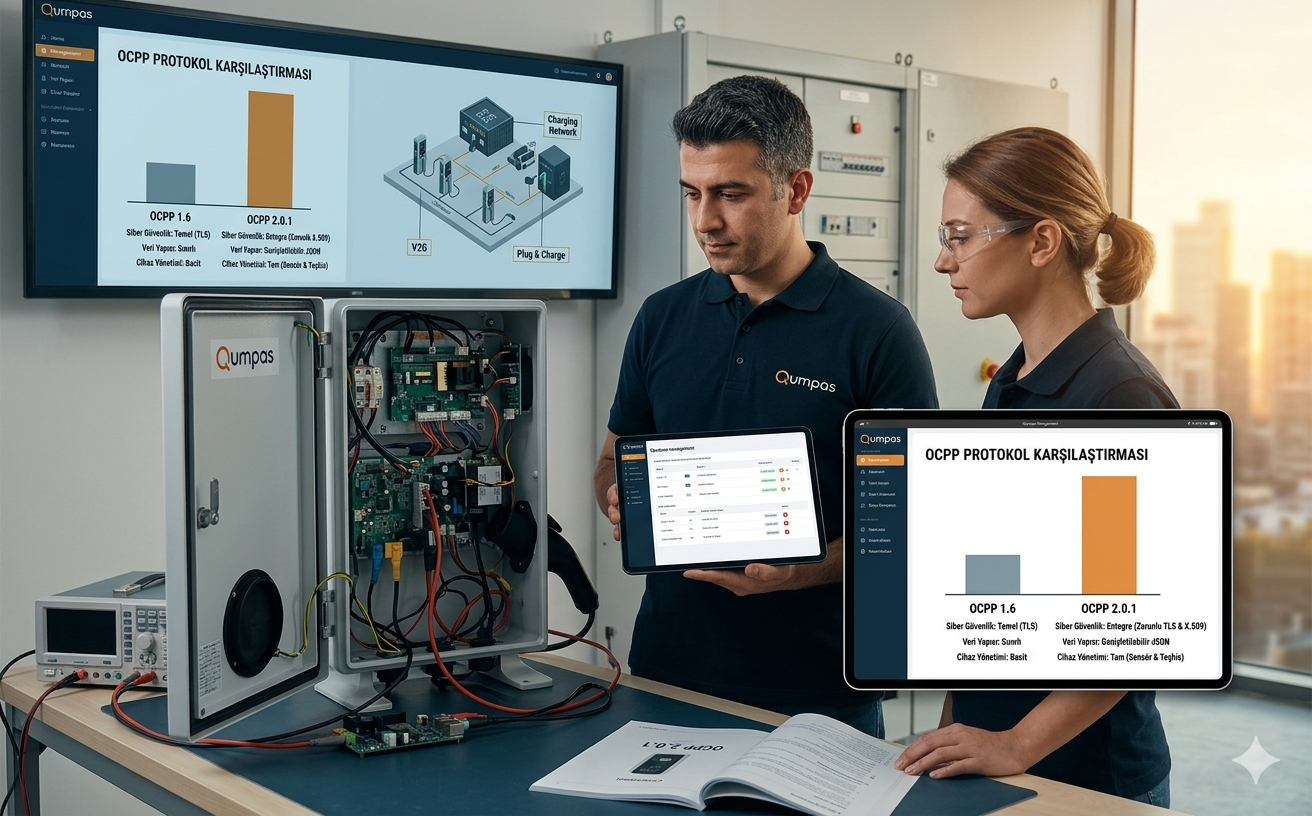
The sustainability of Electric Vehicle (EV) charging infrastructure relies on the seamless communication between charging stations of various brands and central management software. The international standard enabling this communication is OCPP (Open Charge Point Protocol), developed by the Open Charge Alliance (OCA). While OCPP 1.6 has been the industry's primary backbone for years, laying the foundation for a hardware-independent market, the next-generation OCPP 2.0.1 is a comprehensive architectural update designed to tackle increasing cyber threats, complex energy grids, and rising user experience expectations. This article examines the critical differences between the two protocols for technical teams and explores why transitioning to 2.0.1 is a strategic technical necessity.
1. Architectural Design and Data Structure: Flexibility and Scalability
OCPP 1.6 had a simpler structure supporting JSON and SOAP protocols, operating with a limited number of message types. In contrast, OCPP 2.0.1 features a more modular and extensible architecture built entirely on JSON (over WebSocket):
-
Message Structure and Expansion: Unlike the rigid structure of 1.6, message types and data fields in 2.0.1 are much more flexible. This allows hardware manufacturers to easily add "Vendor-Specific" extensions, enhancing software-hardware harmony.
-
Device Management: One of the most significant innovations in 2.0.1 is the detailed device management model. The software can instantaneously query hundreds of parameters—not just charging status, but also fan speed, temperature sensors, and the technical health of internal components. This level of oversight was limited in 1.6.
2. Cybersecurity: Integrated and Proactive Protection
The security model of OCPP 1.6 relied on the Transport Layer Security (TLS) layer and was reactive in nature. OCPP 2.0.1 integrates security into every cell of the protocol:
-
Mandatory Certificate Management: The connection security between charging stations and the central system (Qumpas) is ensured through strict certificate (X.509) management. 2.0.1 automates certificate renewal and validation processes.
-
Encryption and Secure Boot: The hardware itself is subject to security audits. 2.0.1 can verify whether the hardware firmware has been tampered with (Secure Boot) and protects all data traffic against cyberattacks with mandatory encryption.
3. Smart Energy Management and Grid Integration (V2G)
Smart charging features in OCPP 1.6 (such as power limiting) were limited. OCPP 2.0.1 was designed for the smart grids of the future:
-
Vehicle-to-Grid (V2G) Support: 2.0.1 is fully integrated with the ISO 15118 standard, supporting EV batteries in giving energy back to the grid (V2G). This plays a critical role in energy storage and grid balancing processes.
-
Scheduled Charging and Pricing: For tariffs with variable energy prices, 2.0.1 can transmit scheduled charging programs and dynamic pricing data directly to the charging station.
4. User Experience and Operational Ease: Plug & Charge
OCPP 2.0.1 significantly improves the end-user experience and the operational burden on the network operator:
-
Plug & Charge (ISO 15118): This is one of the most impactful features. Without the need for RFID cards or mobile apps, the vehicle and station automatically perform authentication and start charging as soon as the cable is plugged in. This level of convenience was only possible in 1.6 through non-standard extensions.
-
Dynamic Tariff Notification: The charging station screen can display the instantaneous price of the current charging session or upcoming tariff changes to the user. This process was technically complex in 1.6.
Future-Ready Technical Infrastructure with Qumpas
OCPP 2.0.1 is not just a software update for charging networks; it is a strategic engineering necessity for cybersecurity, technical oversight, and grid integration. To establish a hardware-independent ecosystem and be ready for future technologies like V2G and Plug & Charge, hardware manufacturers and operators must prioritize the transition to 2.0.1. With its modern architecture supporting both protocols in technical depth, Qumpas acts as a "Technical Management Brain" that protects your network against cyberattacks, manages grid load with smart software, and reports your operational efficiency in seconds.
Contact Qumpas experts today to introduce your network to future standards and create your technical transition plan.